

In This Article
Choosing Glasses Is a Team Effort
The right glasses should look good to you, feel comfortable, and work well with your prescription. Finding that combination is a collaboration between you and your optical consultant.
You bring your preferences: the styles, colors, and materials you like, how glasses feel on your face, and what you need them for. Your consultant helps evaluate frame proportions, prescription compatibility, lens options, and fit.
A frame you love may work beautifully as it is. Sometimes, a slightly smaller size, a different bridge, or a similar shape will give you a better result. Our role is to explain those differences and help you choose confidently.
What You Should Look For
Start with your own opinion on the glasses. You don’t need to know the technical details to have useful input.
Style and color: Which frames do you enjoy seeing on your face? Are there shapes or colors you consistently prefer?
Material and feel: Do you like the feel of lightweight metal, the structure of acetate, or a particular bridge or nose-pad design?
Comfort: Tell us about pressure, slipping, heaviness, or anything that bothers you. Your feedback helps us distinguish an adjustment issue from a frame that isn’t a good match.
Everyday use: Explain when you wear your glasses and what you need to see comfortably, including computer screens, reading material, or the road.
Budget: Share what you’re comfortable spending so we can explain the options within that range.
Bring your current glasses, even if you dislike them. Knowing what has and hasn’t worked gives us a useful starting point.
What Our Optical Consultants Help You Evaluate
Some details become apparent only when we consider the frame, your prescription, and how the glasses sit on your face together.
Enough Room for Progressive Lenses
Progressive lenses contain areas for distance, intermediate, and near vision. The frame needs enough usable height to accommodate the chosen lens design, with those areas positioned correctly in front of your eyes.
We check where your pupils sit within the frame and whether it stays in place. A frame that is too shallow or repeatedly slips can make it harder to use the intended viewing areas comfortably.
Frame Size and Shape for Stronger Prescriptions
With stronger prescriptions, frame selection can make a noticeable difference in lens thickness and weight.
A smaller, well-centered frame often helps keep lenses thinner. For stronger nearsighted prescriptions, rounder shapes can also reduce the thick outer corners associated with wide, angular frames. We consider these factors alongside your facial proportions and preferred style.
You don’t have to calculate those trade-offs yourself. We’ll explain when a change in frame size or shape is likely to improve the finished glasses.
Shape and Proportion on Your Face
Our consultants can suggest shapes that complement your features and help compare frame width, bridge placement, and proportions.
Face shape provides a starting point, rather than a rule you have to follow. Two frames with a similar outline can look very different because of their size, thickness, and position on your face.
Fit With Your Finished Lenses
Display lenses don’t necessarily weigh the same as your prescription lenses. We consider how the completed glasses will sit, where their weight will rest, and how the frame can be adjusted.
The aim is a secure, comfortable fit that keeps your lenses in the intended position throughout the day.
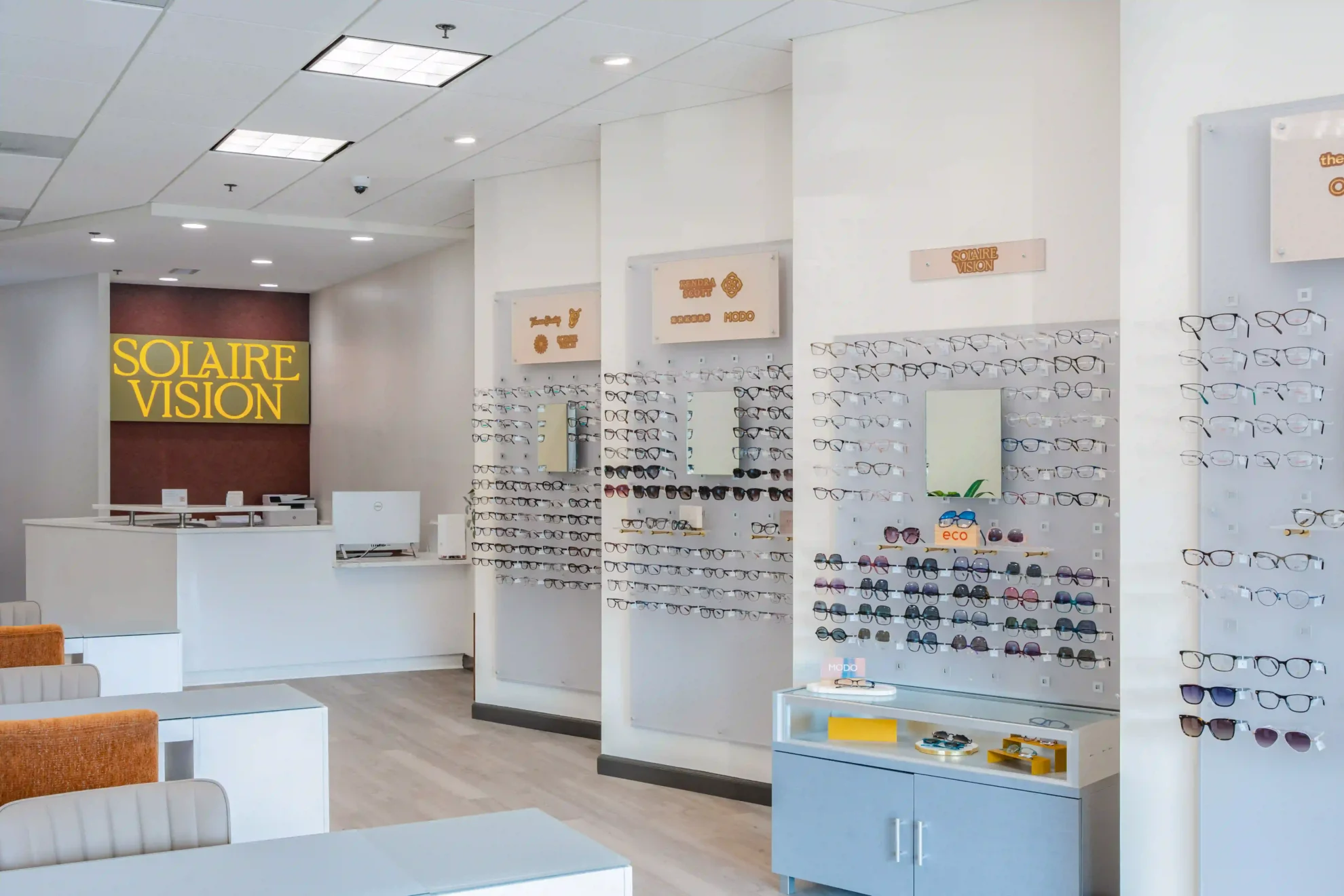
Comparing style, comfort, and clarity between different eyewear options.
Why Frame Quality Matters
Frame quality affects how well your glasses maintain their fit after weeks and months of wear.
Holding Their Shape
Materials, hinges, and construction influence how well a frame holds its shape and adjustment. When a frame spreads, twists, or repeatedly slips, it changes where the lenses sit in front of your eyes. That can affect both comfort and vision.
A well-made frame should provide a stable foundation for your lenses, with a design suited to the way you wear your glasses.
Comfort Over Time
Weight distribution, smooth finishing, and well-designed contact points matter when glasses spend hours on your face. A frame can feel substantial without being uncomfortable, or lightweight without fitting securely.
This is why we consider construction and fit together. Material alone doesn’t tell you whether a frame will be comfortable.
At Solaire Vision, our Curated Eyewear Collection is individually selected for design, comfort, and construction. We evaluate how a frame is made and how it will function as everyday eyewear.
Why Lens Quality Matters
Two pairs of glasses can contain the same prescription and still provide different visual experiences. Lens design, material, coatings, and fitting all contribute.
Clarity and Ease of Adaptation
With progressive lenses, design affects the width and placement of the usable viewing areas and the transitions between them. A suitable design, paired with accurate measurements, can make it easier to find clear vision and adapt to the glasses.
We consider your daily activities and how the frame sits on your face when recommending lenses. Someone who spends hours at a monitor may have different needs from someone who primarily uses glasses for driving and reading.
Fewer Reflections and Easier Cleaning
Anti-reflective coatings reduce distracting reflections from the lens surfaces. Water- and oil-repellent treatments make fingerprints and smudges easier to remove, while scratch-resistant treatments help protect the surface through everyday use.
Coating durability matters because these benefits need to last beyond the first few weeks. Scratch resistance doesn’t make lenses scratch-proof, but it helps preserve their condition with proper care.
UV Protection From the Front and Back
UV protection involves more than light passing through the front of a lens. UV rays coming from behind or beside you can also reflect off the back surface toward your eyes.
UV-blocking lens materials protect against rays passing through the lenses. A coating designed to reduce back-surface UV reflection adds protection from that second direction. Ask whether your selected lenses address both.
Accurate Measurements and Verification
Lens quality also depends on how the glasses are measured, made, and fitted.
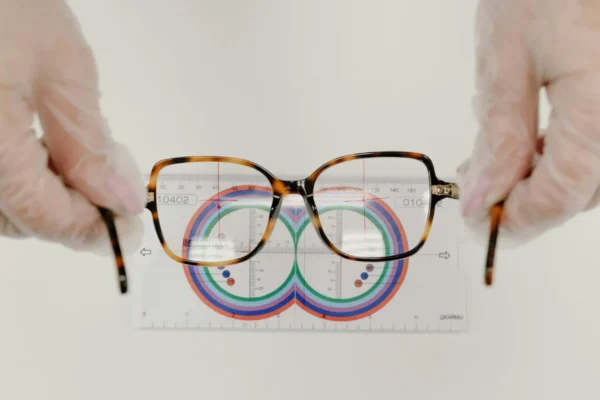
At Solaire Vision, we take digital measurements, inspect the finished lenses, and fine-tune the frame at pickup. These steps help ensure the lenses sit where intended and that the completed glasses match what was prescribed and ordered.
Conclusion
Your preferences should guide the glasses you choose. Technical guidance helps turn those preferences into eyewear that also delivers clear vision, a comfortable fit, and reliable everyday performance.
You should understand why a frame or lens is being recommended and feel confident that the finished pair will suit you.
Eyewear at Solaire Vision
Our optical consultants will help you explore our Frame Collection, compare suitable options, and understand how each choice affects your finished glasses.
Visit our Herndon or Oakton office with your current prescription, or Contact Us to arrange time with an optical consultant. If you’re due for an eye exam, Book an Appointment online in a couple of minutes.
Signs Your Glasses Are Not Working
- Headaches or eye strain by midday.
- Pressure or soreness around ears or nose pads.
- Blurry edges or halos when looking straight ahead.
- Avoiding night driving due to poor clarity.
- Constantly adjusting or removing your glasses.
Ready for Better Eyewear?
Book an eye exam online in minutes or call to schedule