

Contents
How Does Ortho-K Work?
Myopia, commonly called nearsightedness, develops when light focuses in front of the retina instead of directly on it. This often happens because the eye grows too long from front to back.
As children grow, their eyes may continue to elongate, causing their prescriptions to become progressively stronger.
Ortho-K addresses two important aspects of myopia:
1. Clearer daytime vision
Your child wears specially designed, rigid gas-permeable contact lenses while sleeping. These lenses gently and temporarily reshape the cornea, the clear front surface of the eye.
After removing the lenses in the morning, many children can see clearly throughout the day without glasses or contact lenses.
2. Slower myopia progression
Beyond correcting vision, Ortho-K changes how light focuses across the retina. Research suggests this helps slow the elongation of the eye, which is a major driver of worsening nearsightedness.
The corneal reshaping is temporary, so consistent overnight wear is needed to maintain clear daytime vision. However, the goal of myopia management is longer-term: slowing how much the eye grows during childhood.
How Effective Is Ortho-K for Myopia Management?
Research has shown that Ortho-K can reduce eye elongation by more than 50% compared with conventional single-vision correction over a two-year period.
That doesn’t mean every child’s prescription will stop changing. Results vary depending on age, prescription, individual eye characteristics, and consistency of treatment.
Still, slowing progression can make a meaningful difference.
Higher levels of myopia are associated with increased lifetime risks of retinal detachment, glaucoma, myopic macular degeneration, and other eye conditions.
By slowing the rate at which a child’s eyes elongate, myopia management aims to reduce how nearsighted they ultimately become.
The earlier progressive myopia is identified and appropriately managed, the more opportunity there may be to influence its course.
Who Is a Good Candidate for Ortho-K?
Ortho-K can be a great option for children with progressive myopia, particularly those who would benefit from clear vision without wearing glasses or contact lenses during the day.
It may be especially appealing for:
Active children: Those involved in sports or activities where glasses can be inconvenient.
Children with progressing prescriptions: Those whose nearsightedness is becoming stronger as they grow.
Children who prefer not to wear daytime contacts: Ortho-K lenses are worn at home, often with help or supervision from a parent.
Families who want to manage myopia early: Parents looking beyond stronger glasses prescriptions toward slowing their child’s eye growth.
Children as young as six may be candidates, depending on their eye health, prescription, maturity, and ability to follow the lens care routine.
Ortho-K can also be used by adults who want freedom from daytime glasses or contacts, although its role in slowing myopia progression is primarily studied in children.
Not every child is a good candidate. Their corneal shape, prescription, eye health, and ability to safely handle contact lenses all matter.
A comprehensive evaluation helps us determine whether Ortho-K is appropriate or whether another myopia management treatment would be a better fit.
What to Expect During Ortho-K Treatment
Ortho-K requires more specialized fitting and follow-up than conventional contact lenses. Here’s how the process typically works.
1. Comprehensive Eye Exam and Evaluation
We begin by evaluating your child’s vision, eye health, prescription history, and risk of continued myopia progression. If Ortho-K is a suitable option, we use specialized corneal mapping technology, called topography, to measure the shape of the eye’s surface. These detailed measurements help us design lenses specifically for your child’s eyes.
2. Custom Lens Fitting
Once the lenses are ready, we’ll evaluate their fit and teach your child how to insert, remove, and care for them safely. We take the time to make sure both you and your child feel comfortable with the routine before beginning treatment.
3. Overnight Wear
Your child wears the lenses while sleeping, typically for about 7 to 9 hours, depending on their individual treatment plan. Some children notice improved vision after the first night. For others, it may take several days or weeks to achieve consistent daytime clarity. During this adjustment period, temporary vision correction may still be necessary.
4. Ongoing Monitoring
Follow-up visits are an important part of Ortho-K treatment. We monitor the lens fit, corneal health, daytime vision, and how your child’s myopia is progressing. Because Ortho-K changes the cornea’s shape, measuring the eye’s axial length is especially useful for assessing myopia progression over time. As your child grows, we may adjust their lenses or treatment plan to maintain the best possible results.
Is Ortho-K Safe for Children?
Ortho-K has been used for many years, and appropriately selected children can wear these lenses successfully. However, overnight contact lens wear carries a greater risk of corneal infection than daytime contact lens wear, so good hygiene and consistent follow-up are essential.
Children and parents need to follow the prescribed cleaning and disinfection routine, keep lenses away from tap water, and avoid swimming or showering in their lenses.
If your child experiences significant redness, pain, unusual light sensitivity, or sudden blurry vision, they should remove the lenses and contact their eye doctor promptly for urgent evaluation.
The lenses used for Ortho-K are FDA-approved for temporary correction of myopia. Their use specifically to slow childhood myopia progression is considered off-label, although substantial clinical research supports this application.
We’ll discuss the benefits, limitations, and risks with you so you can make an informed decision.
Frequently Asked Questions
Does Ortho-K permanently correct nearsightedness?
No. The cornea gradually returns to its original shape when Ortho-K lenses are discontinued, and the vision-correcting effect wears off.
The long-term benefit we’re seeking in children is slower eye growth, not a permanent reshaping of the cornea.
How long do Ortho-K lenses last?
Ortho-K lenses are reusable and often replaced approximately once a year, although replacement timing depends on lens condition, prescription changes, and your doctor’s recommendations.
Unlike disposable soft contact lenses, they require careful daily cleaning and storage.
Is Ortho-K uncomfortable?
Some children notice the lenses initially, especially while learning how to insert and remove them.
The lenses are worn with the eyes closed during sleep, which many children find convenient. Comfort generally improves as they become accustomed to handling the lenses, but persistent discomfort should always be evaluated.
Does insurance cover Ortho-K?
Ortho-K for myopia management is generally not covered by standard vision or medical insurance plans, although benefits vary.
Our team will explain the treatment costs and what’s included before you make a decision.
How Long Will It Take To See Clearly Without Daytime Lenses?
Each patient is unique, it may take as little as a few days or up to a few weeks. With each day, your child will see better for longer.
Is Ortho-K better than MiSight, atropine, or myopia management glasses?
Not necessarily. Each treatment has its own advantages.
Ortho-K offers the added convenience of clear daytime vision without glasses or contacts for many children. MiSight uses daily disposable contact lenses, low-dose atropine involves prescription eye drops, and Stellest provides a glasses-based treatment option.
The right choice depends on your child’s age, prescription, eye health, lifestyle, and your family’s preferences.
You can read more in our guide to choosing a myopia management treatment.
Ortho-K at Solaire Vision in Herndon and Oakton
At Solaire Vision, our myopia management program is guided by Dr. Sami Khaldieh, an IACMM-accredited optometrist with advanced training in myopia management and orthokeratology.
Ortho-K requires precise measurements, careful fitting, and ongoing monitoring. We take the time to get those details right, explain our recommendations, and track how your child’s eyes respond over time.
We also believe the best treatment isn’t necessarily the most advanced or most expensive one. It’s the one that’s right for your child.
That’s why our myopia management program includes several evidence-based options, including Ortho-K, MiSight contact lenses, low-dose atropine, and Stellest lenses.
Our goal is to help your child see clearly today while doing what we can to slow the progression of their nearsightedness.
Interested in Ortho-K for Your Child?
Our optometrists provide myopia management at both our Herndon and Oakton, Virginia offices.
If your child’s prescription keeps getting stronger, or you’d simply like to understand whether Ortho-K could be appropriate, we’re happy to help you explore your options.
Call to book an appointment with Solaire Vision to discuss your child’s myopia management needs.
Herdon Office: 703-239-6633
Oakton Office: 703-239-6630
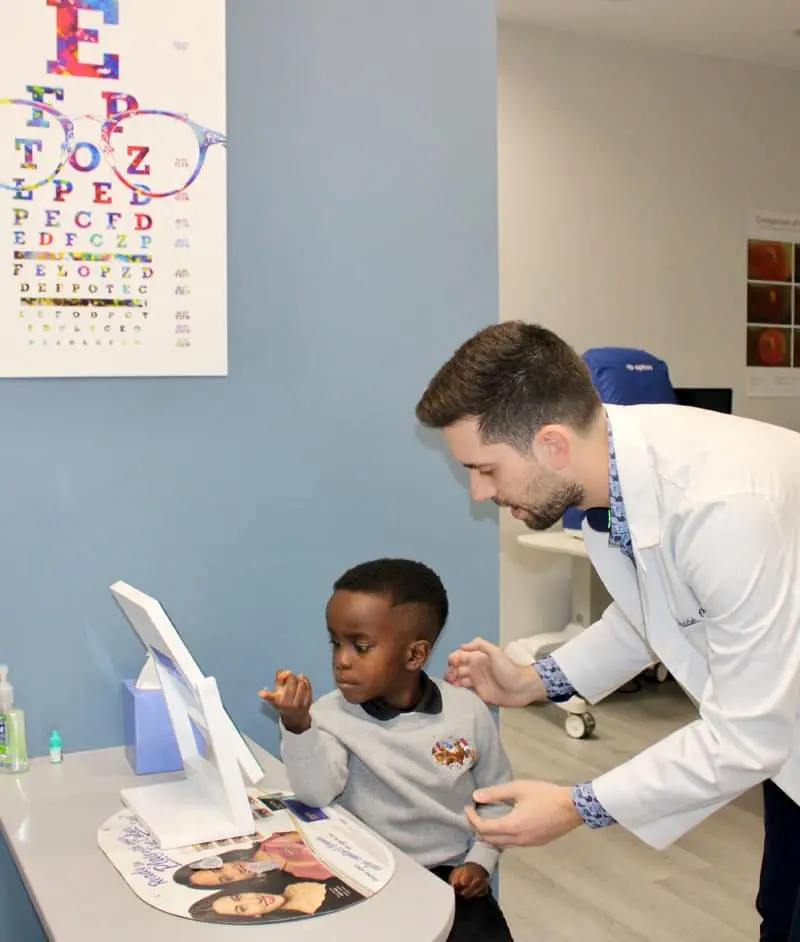
Ready to Explore Ortho-K for Your Child?
Schedule a myopia management consultation with our team and find out if Ortho-K is the right option.