
In This Article
Keep Up With Eye Exams
Children don’t always recognize that their vision is blurry. If they’ve never seen the classroom board clearly, they may assume everyone sees it the same way.
For school-age children, we recommend annual eye exams, sometimes with more frequent visits when a condition needs monitoring. An exam checks their prescription, eye health, and how their eyes focus and work together.
School and pediatrician vision screenings are useful for identifying children who need further evaluation. They don’t provide the same information as a comprehensive eye exam. If your child has symptoms, a passing screening is not the end of the conversation.
Make Time for Outdoor Play
Spending time outdoors helps lower the risk of developing myopia, or nearsightedness. Aim for about one to two hours outside each day when practical. A walk, playground visit, or time in the backyard all count.
Build outdoor time into routines your family already has. Walking part of the way to school or playing outside after homework can make it easier to maintain.
For a child who already has myopia, outdoor time is still a useful habit, but it doesn’t replace prescribed treatment or follow-up care.
Glasses Are Your Friend, Not Foe
Myth: Once your child starts wearing prescription glasses, their vision will progressively worsen as a result.
Fact: On the contrary, once your child starts wearing prescription glasses, it can actually give their eyes a chance to stabilize.
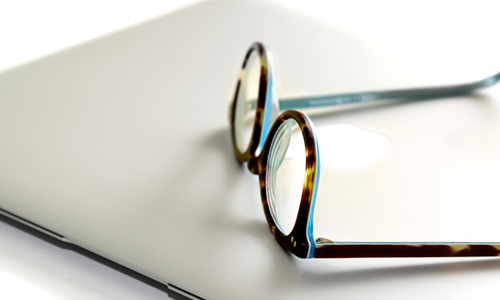
Glasses correct existing vision problems and help your child see clearly, supporting their ability to focus in school, socialize confidently, and participate in activities.
If your child needs glasses but doesn’t wear their glasses, they may struggle to keep up academically and socially. It can also lead to headaches, eye strain, and difficulty concentrating in class, all of which can hinder their performance. Ensuring that your child wears their glasses as prescribed is vital for both their vision and their overall development. With proper use, glasses help your child see and provide the visual foundation they need for success in both learning and play.
Give Their Eyes Breaks From Close Work
Reading, homework, and screens all require sustained focusing up close. Long stretches without a break can leave children with tired eyes, headaches, or blurry vision. Taking a 10 minute break every 50 minutes is a good rule of thumb.
Encourage your child to keep books and handheld devices at least 12 inches from their face. A computer screen should sit farther away, around arm’s length. Enlarge the text if they’re leaning in to read it.
The goal is to break up long periods of close work and give their eyes a chance to relax.
Notice Changes in How They See
Pay attention if your child starts:
Squinting or moving closer to the television
Holding books unusually close
Closing or covering one eye
Complaining of headaches, blurred vision, or double vision
Losing their place or avoiding reading
Ask specific questions: “Does the board look clear?” or “Do the words ever look blurry or double?” Those can be easier to answer than “Can you see okay?”
Let the eye doctor know when the problem happens and whether a teacher has noticed it too. Repeated symptoms deserve an evaluation, even if your child hasn’t asked for help.
Consider Vision When Attention Is a Concern
A child who struggles to see clearly or keep their eyes working together may lose their place, stop reading, or seem distracted during schoolwork. Those behaviors can sometimes be mistaken for inattention.
One example is convergence insufficiency, where the eyes have difficulty working together at near. It can cause headaches, double vision, and trouble concentrating during reading, even when a child can read an eye chart clearly.
If ADHD is being considered, or your child is struggling with attention during visual tasks, include a vision assessment in the discussion with their pediatrician. Identifying a vision problem helps ensure it isn’t overlooked or mistaken for an attention problem.
Vision problems and ADHD can also occur together. An eye exam doesn’t diagnose or rule out ADHD, and treating a vision problem doesn’t treat ADHD itself.
Stay Ahead of Prescription Changes
If your child wears glasses, follow the recommended wear schedule and make sure the frames fit comfortably. Glasses that slide down or pinch are harder for a child to keep on consistently. Bring them in for an adjustment if the fit changes.
When a nearsighted child’s prescription keeps increasing, ask about Myopia Management. Standard glasses correct the blur, while specialized treatment can slow the progression.
Options include Ortho-K, MiSight contact lenses, low-dose atropine, and Stellest glasses. The right choice depends on your child’s prescription, eye health, and ability to follow the routine.
You don’t need to wait for a high prescription to have that conversation.
Protect Their Eyes During Sports and Outdoor Time
For sports with a risk of eye injury, use properly fitted protective eyewear designed for that activity. Regular glasses and contact lenses aren’t substitutes for sports eye protection. Prescription sports goggles are available for children who need vision correction.
Outdoors, choose sunglasses labeled UV400 or 100% UVA and UVB protection. A comfortable fit makes them easier to wear, and a brimmed hat adds protection.
If your child has an eye injury, significant pain, or a sudden change in vision, seek prompt care.
Children's Eye Care in Herndon and Oakton
At Solaire Vision, we provide routine eye exams for children ages 6 and up. We check vision and eye health, explain our findings, and give parents time to ask questions.
You can also schedule a parent or sibling for the same visit to make family eye care easier.
Book an Appointment online in a couple of minutes, or Contact Us with questions.