

In This Article
What Is Dry Eye?
Each time you blink, a thin layer of tears spreads across the front of your eye. This tear film keeps the surface comfortable and creates a smooth surface for clear vision.
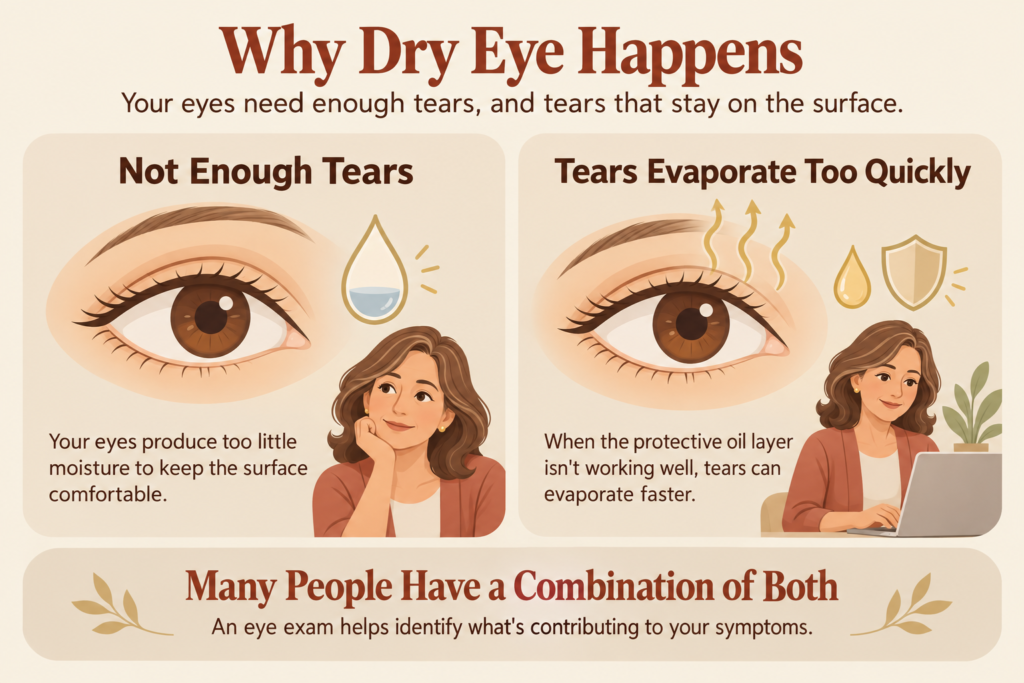
Dry eye develops when that film doesn’t stay stable between blinks. Some people don’t produce enough of the watery part of their tears. Others lose moisture too quickly through evaporation. Many have a combination of both.
What Does Dry Eye Feel Like?
Common symptoms include:
Burning or stinging
A gritty feeling, as though something is in your eye
Redness or irritation
Blurry or fluctuating vision
Sensitivity to light
Excessive watering
Watery eyes can be particularly confusing. Irritation can trigger extra tears, but that watering doesn’t necessarily correct the problem with the tear film. Your eyes can water and still have dry eye.
These symptoms can overlap with other eye conditions, so an exam helps confirm what’s causing them.
What Causes Dry Eye?
The small oil glands along your eyelids play an important role in keeping tears from evaporating too quickly. When these glands become blocked or don’t release enough healthy oil, the tear film becomes less stable. This is called meibomian gland dysfunction, a common contributor to dry eye.
Other factors can contribute or make symptoms worse:
Screen use: We tend to blink less while concentrating on a screen.
Age and hormonal changes: Tear production can change with age and during menopause.
Your surroundings: Wind, smoke, dry indoor air, and air blowing toward your face can increase evaporation.
Medications and health conditions: Some allergy medicines and other prescriptions contribute to dryness. Thyroid disease and certain autoimmune conditions can also affect tears.
Contact lens wear can contribute as well. Often, several factors are involved, which is why the same treatment won’t suit everyone.
How Do We Evaluate Dry Eye?
We start by asking when your eyes bother you, what makes them worse, and what you’ve already tried. Bring the names of any eye drops you use, along with your medication list.
The examination looks at the surface of your eyes, your eyelids, and how your tears behave. Depending on the findings, testing may assess how much moisture your eyes produce and how long the tear film stays intact after a blink.
That information helps us explain what’s contributing to your symptoms and recommend a plan with a clear purpose.
How Is Dry Eye Treated?
Treatment depends on the cause and severity. A plan may combine home care with prescription treatment or an office procedure.
Lubricating Eye Drops
Artificial tears add lubrication and ease discomfort. They can be useful on their own for mild symptoms or as part of a broader plan. If relief is brief and the irritation keeps returning, the underlying cause may need additional attention.
Eyelid and Oil Gland Care
When the eyelids or oil glands are contributing, treatment may include a warm compress, appropriate eyelid cleaning, or an office-based treatment to improve oil flow. The right approach depends on what the examination shows.
Prescription Treatment and Tear Retention
Prescription medicines can address inflammation or support tear production. For selected patients, tiny plugs placed in the tear drainage openings help keep tears on the eye longer.
Changes to Everyday Habits
Taking screen breaks, blinking fully, redirecting fans or air vents, and using a humidifier in dry rooms can reduce irritation. These changes support treatment and make the daily environment easier on your eyes.

What Should You Expect From Treatment?
Chronic dry eye often needs ongoing care. Some treatments relieve discomfort quickly, while others take longer to improve the condition of the eye’s surface. Follow-up helps us assess your response and adjust the plan when needed.
Let your doctor know if a treatment is difficult to maintain or isn’t providing enough relief. A useful plan needs to work in your everyday life.
When Should You Schedule an Evaluation?
Schedule an eye exam if symptoms keep returning, you’re relying on drops to get through the day, or discomfort is interfering with reading, work, or contact lens wear.
Sudden vision changes, significant pain, or marked redness need prompt evaluation rather than being assumed to be dry eye.
At Solaire Vision, we evaluate dry eye in Herndon and Oakton and build treatment around what’s contributing to your symptoms. We’ll explain the findings, what we recommend, and how we’ll monitor your progress.
Book an Appointment online in a couple of minutes, or Contact Us with questions.